Last updated November 21, 2026
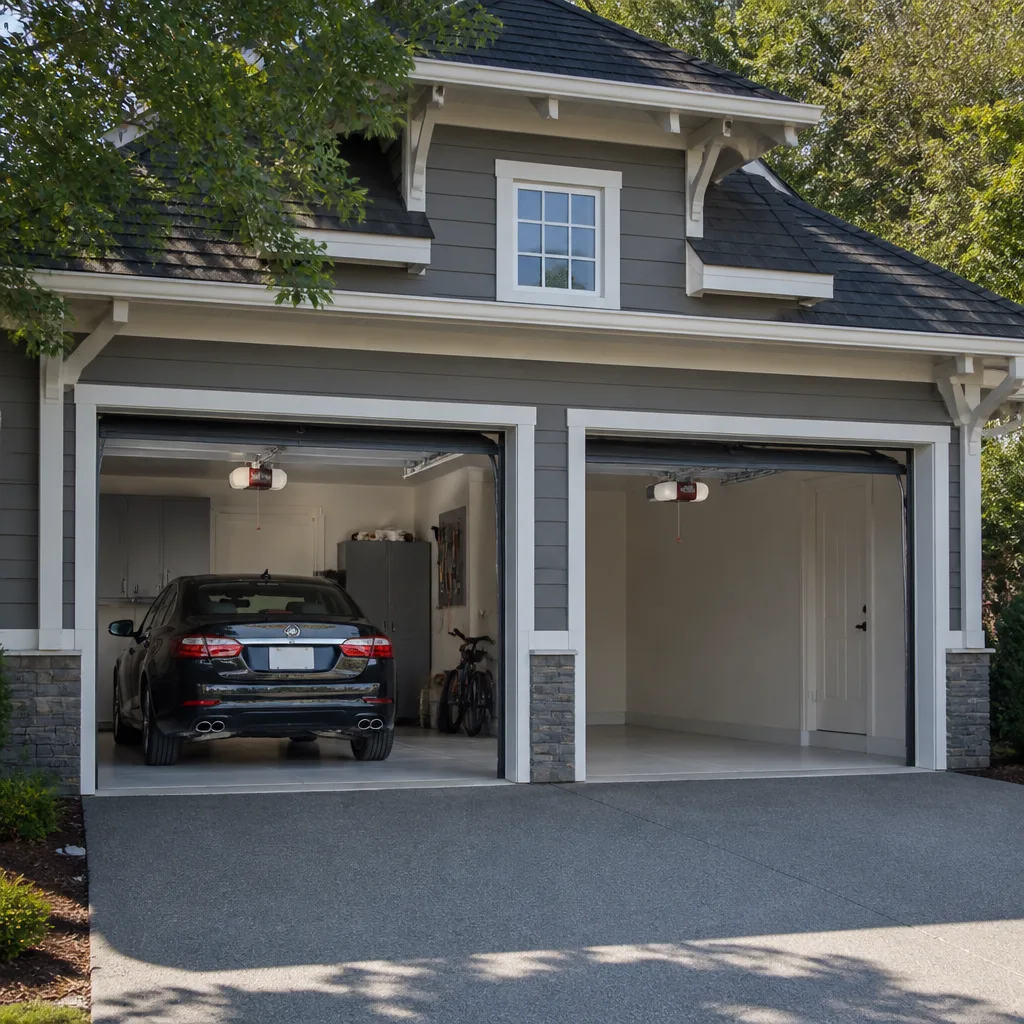
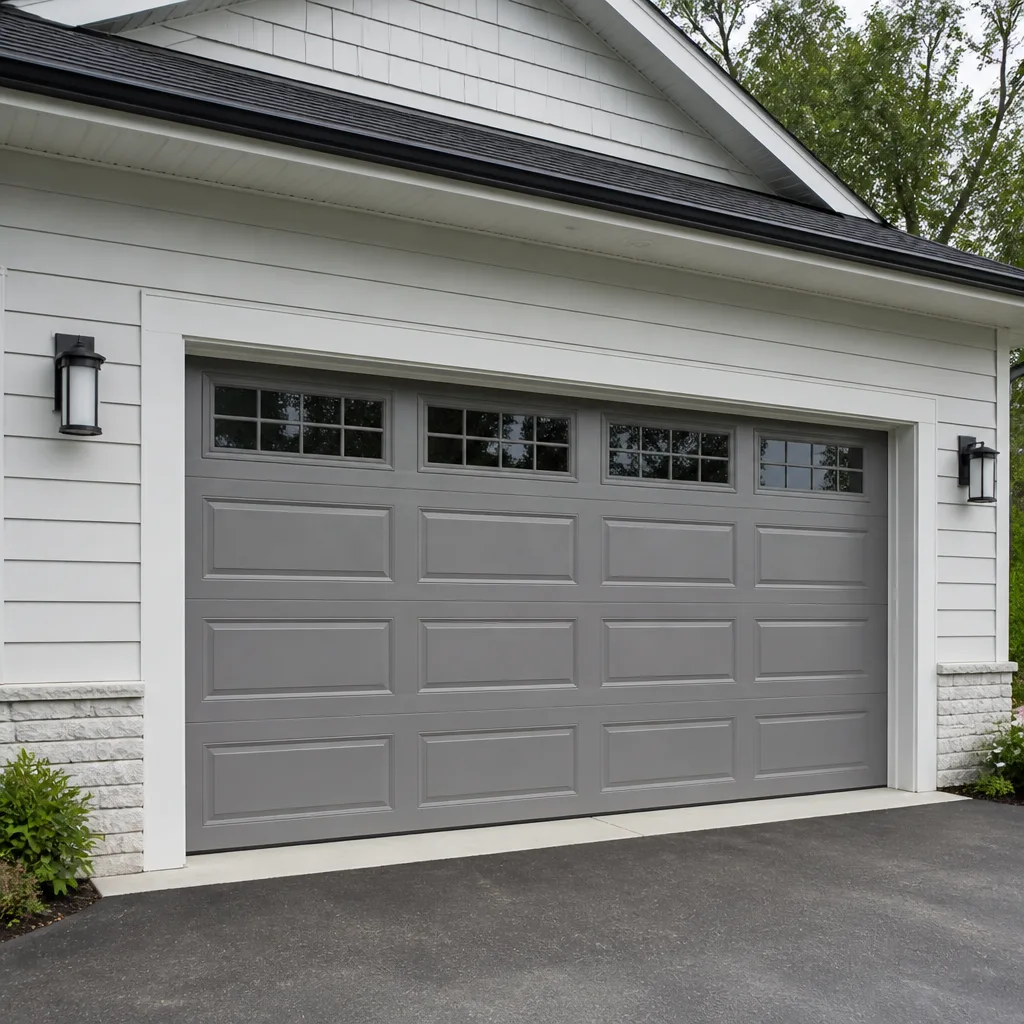
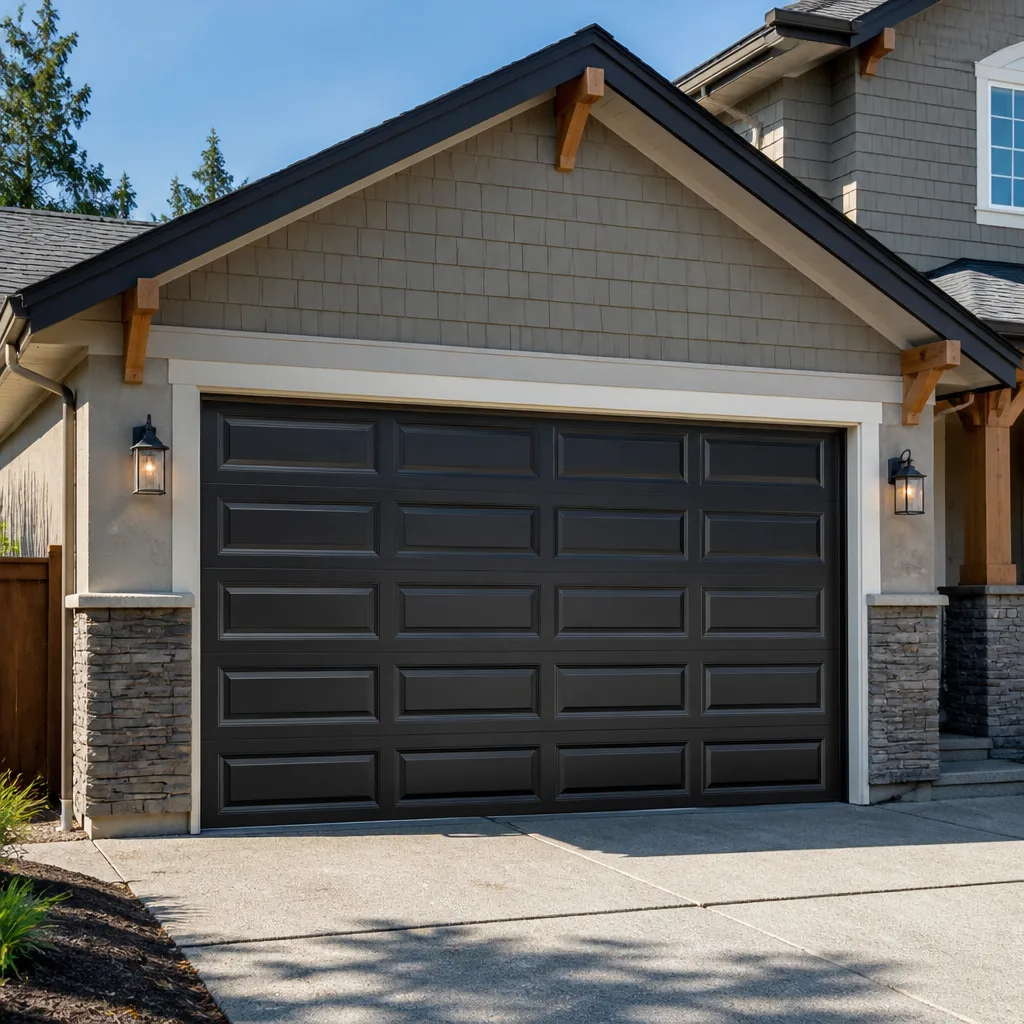 Raised-panel steel
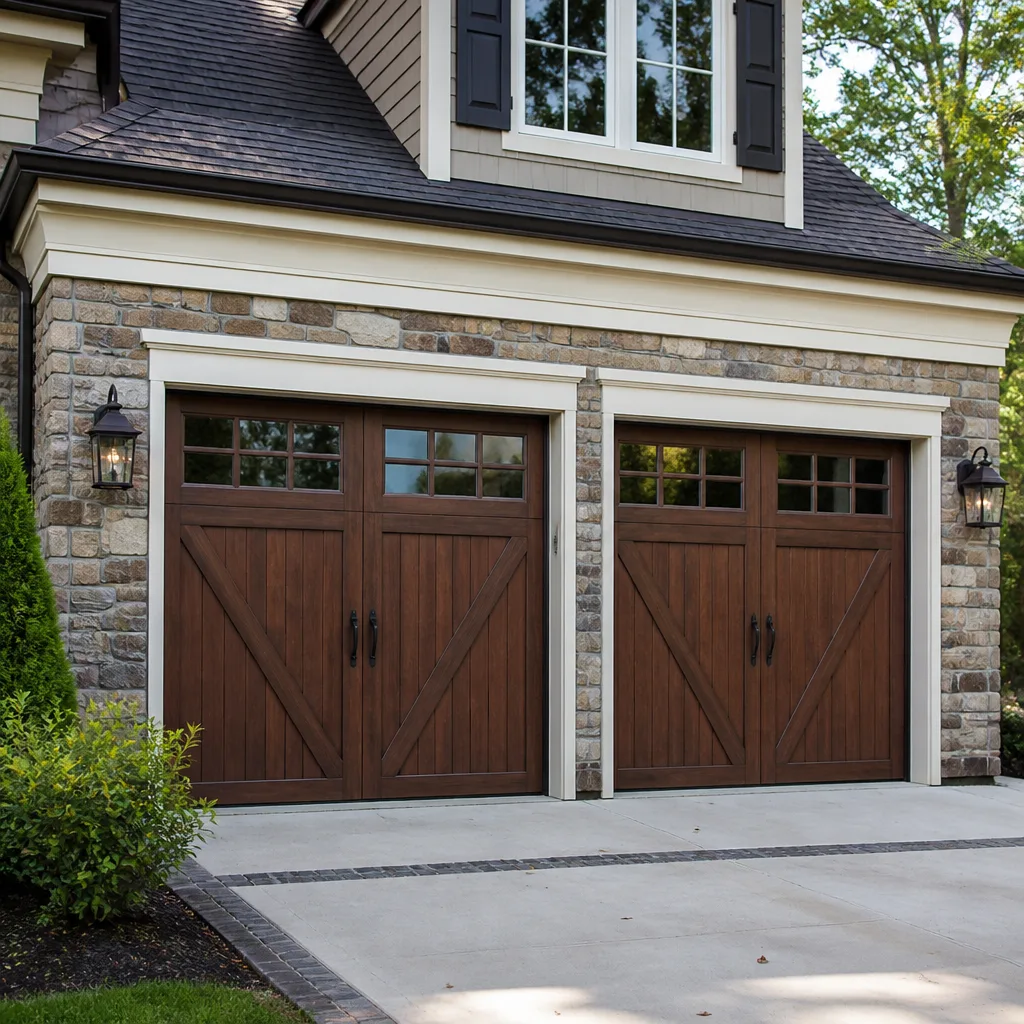 Carriage house
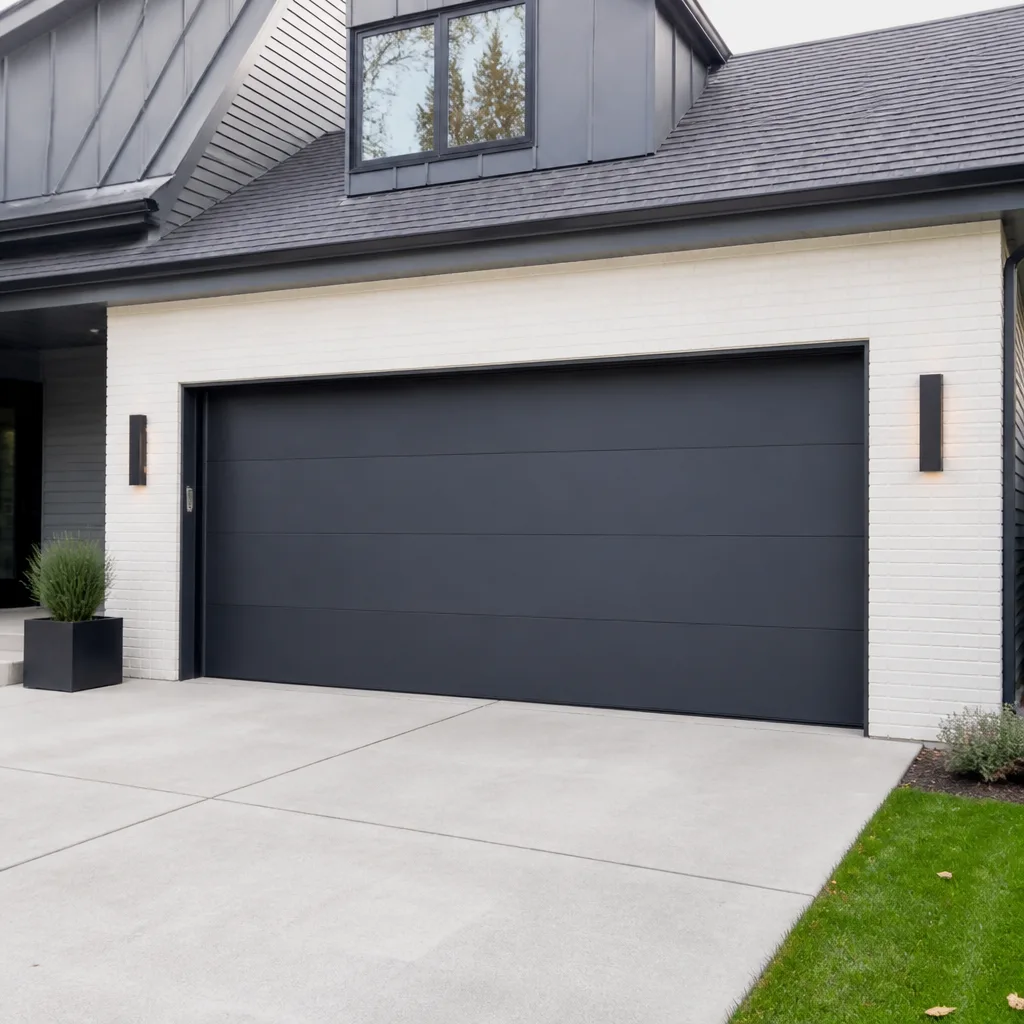 Modern flush
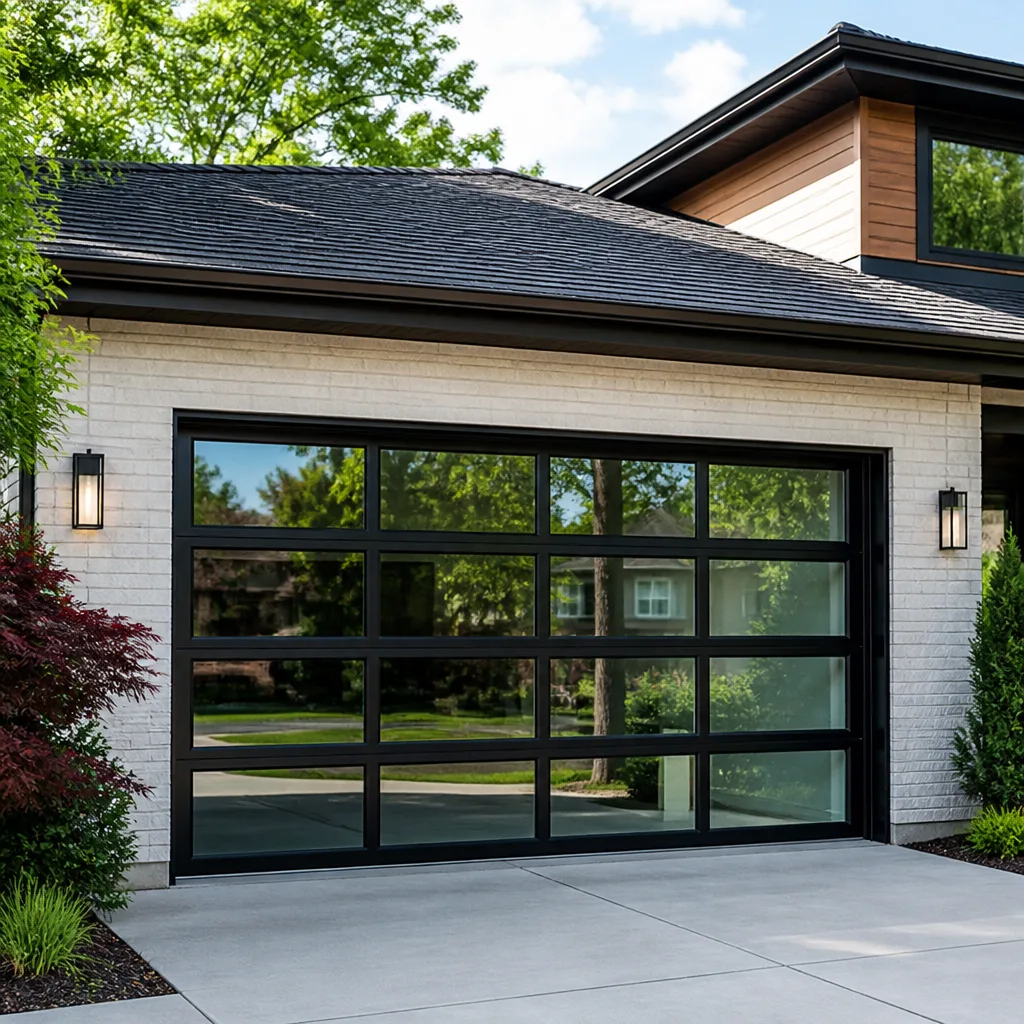 Full-view glass
 LiftMaster openers
 Chamberlain openers
Full 25-point door and opener safety check with every visit - springs, cables, rollers, tracks, and your LiftMaster or Chamberlain opener included
You get a price before we start. It does not change when the pro arrives.
Get your free estimateGarage Door Repair Troubleshooting in Belmont Cragin: Common Problems and How to Fix Them
The most wasted garage door service call in Belmont Cragin is the one where a perfectly healthy opener gets replaced because a cheap nylon roller was grinding itself flat. That’s not a guess. It’s the pattern we see over and over: homeowners hear a noise or watch the door stall, assume the motor is dying, and spend money on the wrong part. The real failure is usually one step upstream in the chain of components, and it’s often something small. This guide maps the symptoms you’re hearing and seeing to the mechanical part actually causing them, separates the fixes you can safely handle from the ones that need a professional, and explains why a Belmont Cragin door behaves differently in January than it does in July. Read it before you call anyone, including us.
Quick Answer
Most garage door problems in Belmont Cragin trace back to four components: rollers, springs, the track, or the opener’s drive gear, and the symptom you notice is rarely the part that failed. If the door is noisy, suspect rollers or hinges. If it’s heavy or won’t stay up, suspect springs. If it binds or drifts sideways, suspect the track. If the motor runs but the door doesn’t move, suspect the opener gear or the manual release. Run a balance test with the door disconnected before you buy anything, and never touch a torsion spring yourself.
Styles & brands we work with
- Raised-panel steel
- Carriage house
- Modern flush
- Full-view glass
- LiftMaster openers
- Chamberlain openers
Table of Contents
- The Symptom-to-Component Matrix: Which Part Is Actually Failing
- The One Test to Run Before You Call Anyone
- Why Belmont Cragin Doors Act Different in January and July
- How One Misaligned Track Cascades Into Five Problems
- What You Can Fix Safely and What You Absolutely Shouldn’t
- Springs, Cables, and the Parts That Injure People
- Parts, Brands, and Getting the Right Replacement
- What Repairs Typically Cost and How to Avoid a Surprise
The Symptom-to-Component Matrix: Which Part Is Actually Failing
Start here. The sound or behavior you’re noticing is a signal, and the job is to trace it back to the part that produces it. Below is how we walk through a diagnosis, in the order it usually makes sense.
- Grinding or scraping as the door moves: Almost always rollers or hinges, not the opener. Worn steel rollers on a track that’s slightly out of line create a metal-on-metal grind. Nylon rollers get flat spots and rumble. If the grinding happens only in one section of travel, look at the track at that height.
- A loud pop or bang, then the door won’t lift: A torsion spring has broken. This is the most common serious failure we see, and it’s not a DIY job. The door will feel extremely heavy and the opener may strain or trip its safety reverse.
- Rattling that’s worse on windy days: Loose hinge bolts, a slack chain, or a door panel that’s working itself loose. Sometimes it’s the opener rail vibrating against a bracket.
- Motor hums but the door doesn’t move: On chain and belt openers, a stripped drive gear inside the unit, or a manual release that got pulled and never reset. Check the release cord and trolley first, because it’s free to check.
- Door reverses before it hits the floor: Photo-eye sensors or the travel limit settings, not a mechanical failure. This is a safety system doing its job. We cover this in the diy section below.
- Door drifts or binds on one side: A bent or misaligned track, or a cable that’s jumped its drum. Stop operating the door if a cable looks slack or off its spool.
- Slow, labored lifting: Springs losing tension, or the wrong spring weight for the door. A door that lifted easily two winters ago and now drags has a spring problem, not an opener problem.
Write down what you hear, when you hear it, and whether it happens on the way up, the way down, or both. That single note cuts a diagnosis down to minutes. It also helps if you eventually need garage door repair, because you’ll describe the right thing to the person on the phone.
The One Test to Run Before You Call Anyone
Before you spend a dollar, find out whether the problem lives in the door or in the opener. The balance test tells you in about two minutes, and it’s the first thing a technician should run too. It also protects you from the classic mistake of replacing an opener that was never the issue.
- Close the door completely and make sure nobody is standing under it.
- Pull the manual release cord to disconnect the door from the opener carriage. The door should now move by hand only.
- Lift the door about halfway and let go. A properly balanced door holds its position or drifts very slightly. A door that slams down, or that you have to fight to lift, has a spring or balance problem.
- Check the force by hand. You should be able to raise and lower a well-balanced single door with reasonable effort using one hand. If it takes real muscle, the springs need attention.
- Reconnect the carriage by running the opener until it re-engages, then test the door through one full open and close cycle.
If the door is balanced and moves smoothly by hand, the trouble is almost certainly in the opener, the sensors, or the wall controls. That points you toward garage door opener repair rather than spring work. If the door is heavy or slams, do not keep running the opener against it, because that forces a healthy motor to do the spring’s job and can damage the drive gear or burn out the unit over time.
Why Belmont Cragin Doors Act Different in January and July
Belmont Cragin sits in a climate of real seasonal extremes. Summer brings heat and humidity that swell wood panels and soften lubricant. Winter delivers repeated freeze and thaw cycles, and the temperature swings across a single week in the Chicago area are enough to make a door that worked fine in October suddenly complain in January. This is where a lot of misdiagnosis happens, because a seasonal quirk and a genuine failing part can feel identical at the wall switch.
Here’s how the seasons change what you experience:
- Winter contraction: Cold shrinks metal tracks and can open up a gap that lets a roller pop out. The same cold hardens lubricant, so rollers and hinges that were quiet in July suddenly squeal. A door that runs rough only on the coldest mornings is often just asking for cold-rated lubrication.
- Frozen ground and settling: When the ground heaves, the door’s bottom seal can drag on an uneven slab, and it looks like a track or spring problem. The door may reverse because the seal is catching, not because the sensor failed.
- Summer expansion: Heat can warp a track out of plumb, make wood panels bind, and thin out lubricant so it runs off the moving parts. Doors that stick in the late afternoon are telling you about expansion, not a failing opener.
- Salt and grit from the street: Winter road treatment tracked onto the driveway gets onto rollers and the track, which accelerates wear. A quick wipe-down and re-lube in early spring extends roller life noticeably.
The distinction matters because some fixes are seasonal and some are permanent. Lubricating rollers and hinges once cold sets in is seasonal maintenance, something you’ll do again next winter. Replacing flattened rollers or correcting a bent track is a permanent fix. If a symptom only appears at one extreme of temperature and disappears in milder weather, it’s worth telling a technician exactly that, because it changes the diagnosis. If a symptom shows up in January and is still there in July, that’s a part on its way out.
How One Misaligned Track Cascades Into Five Problems
A track that’s a fraction of an inch out of line is the quiet troublemaker. It rarely announces itself. Instead, it puts uneven load on everything the door touches, and you start getting a cluster of symptoms that look like separate failures. Homeowners call about “the noisy door,” “the slow opener,” and “the door that won’t close right,” and it’s all the same bent track.
Here’s how the cascade works. When the track is out of plumb, a roller binds at one spot on the travel path. The binding transfers sideways force to the hinge, which loosens. The loose hinge lets the panel shift, and the shifted panel drags the next roller. Meanwhile the opener has to fight the extra friction, so the drive gear and the belt or chain wear faster than they should. A cable can jump its drum if the door travels crooked. By the time you notice, you’re looking at a noisy door that runs slow and occasionally reverses, and it all traces to a track that’s an eighth of an inch off.
Watch for these early signals of a track problem:
- A visible gap between a roller and the edge of the track, especially near the bottom or top of the door.
- The door visibly leaning to one side as it opens, rather than moving straight up.
- A rubbing or scraping noise that happens at the same height every time.
- The door reversing without the sensors being blocked, because the extra friction is tripping the safety reverse.
- A track that’s visibly dented, kinked, or wobbling when the door moves.
If you catch a track issue early, the fix is usually a realignment, and rollers and hinges are still fine. Wait, and you’re replacing rollers, hinges, and possibly the opener gear. That’s the difference between a small adjustment and a much bigger bill. When a track is bent (not just out of line), the safest fix is to replace the affected section rather than bend it back, because a re-bent track tends to fail again at the same spot.
What You Can Fix Safely and What You Absolutely Shouldn’t
Some garage door problems are genuinely homeowner-level, and we’d rather tell you which ones than have you pay for a call you didn’t need. Others are genuinely dangerous, and no guide should hand you the steps for those. Here’s the honest line.
Safe to handle yourself:
- Photo-eye sensor alignment. If the door reverses immediately, check that both sensors are facing each other, clean, and have a clear path. Wipe the lenses, confirm the indicator light on each, and clear cobwebs or debris. This solves a large share of “door won’t close” calls.
- Travel limit and force adjustments on the opener. Most openers from Genie, Chamberlain, and similar brands let you adjust how far the door travels and how much force it uses. Small changes to correct the door not quite reaching the floor or hitting the header are reasonable. Follow the manual for your unit.
- Lubrication. A garage-door-specific lubricant on rollers, hinges, and the torsion spring shaft reduces noise and wear. Don’t use household oil or grease on the track itself, because it attracts grit.
- Tightening loose hardware. A loose hinge bolt or bracket is a simple snug-down with a wrench. Don’t overtighten.
- Replacing the opener remote battery or reprogramming a remote. Straightforward with the manual.
Leave these to a professional:
- Torsion and extension spring replacement. A torsion spring is under enormous tension. A spring that’s being removed or adjusted can release that energy suddenly and cause serious injury. This is the single most dangerous part of a garage door, and it’s why so many generalists won’t touch it.
- Cable replacement or adjustment. Cables are under tension and can snap. They are not a DIY item.
- Track replacement or major realignment. A door that comes off a track under load is heavy and dangerous. Leave the geometry to someone with the right tools.
- Panel replacement on a door with high-tension springs. Removing sections changes the balance and load on the spring system.
If you’re not sure which category your problem falls in, that’s a reasonable time to ask. Our technicians have up to 10 years of experience with exactly these calls, and we’re happy to tell you over the phone whether it’s something you can handle or something we should look at.
Springs, Cables, and the Parts That Injure People
We talk about springs a lot because they’re the most common serious failure and the most dangerous component on the door. A torsion spring sits above the door, wound tight, holding the entire weight of the door in balance. When it breaks, the door becomes very heavy and the opener is left trying to lift a load it was never designed to lift. Extension springs, mounted along the sides on some older doors, carry similar risk. Either way, a broken spring is a stop-operating-the-door situation.
Signs you’re looking at a spring problem:
- The door is very heavy to lift by hand, or won’t stay up when you let go of it.
- A loud bang came from the garage, followed by the door not lifting.
- The opener strains, hums, or trips its safety reverse when trying to lift the door.
- You can see a visible gap in the torsion spring coil above the door.
- A cable looks slack, off its drum, or is hanging loose at the side.
Stop and call. Don’t try to lift the door manually to “just get the car out,” because a door with a broken spring can come down hard. Keep people and pets clear of the doorway until someone qualified has looked at it. Cable faults belong in the same category: a snapped cable is under tension and can whip, and an improperly seated cable can let the door drop.
Spring replacement is a primary service for us, not a referral. It’s a high-skill job many generalists decline for good reason, and we handle torsion and extension springs as core work. When a door has two springs, we replace the pair together, because a spring that’s matched to a new one rarely is, and the second one is usually not far behind the first. We’ll always tell you which springs you have, what condition they’re in, and what a matched pair costs, before any work starts.
Parts, Brands, and Getting the Right Replacement
Half of getting a repair right is using the right part. A roller that’s the wrong size for the track, a spring wound to the wrong weight, or a hinge that doesn’t match the panel gauge will work for a while and then fail early or cause a new symptom. This is where a garage-door-only focus matters. We’re not split across plumbing, HVAC, and general contracting, so the parts knowledge is concentrated on doors and openers.
We service the brands most Belmont Cragin homes and rental properties already have, including Genie, Clopay, Amarr, and Wayne Dalton, along with LiftMaster, Chamberlain, Craftsman, and Raynor. That covers the vast majority of residential and light-commercial equipment in the field here. If your opener or door is one of those, you don’t have to worry about whether it’s supported. We work on the brand you already have.
We also stock and sell garage door parts directly, so you can get components without waiting on third-party shipping or making a trip to a big-box store and hoping the aisle has what you need. That’s useful whether you’re a homeowner replacing your own rollers and hinges or a property manager maintaining several doors across a building. Parts on hand, not on order.
A note on property managers and multi-unit landlords: when you’re responsible for several garage doors, the goal is to catch the small stuff before it becomes a call at the worst possible time. Track wear and roller noise are the two things worth a look every few months on high-traffic doors. When a door needs a full replacement rather than a repair, that work is measured, ordered, and scheduled, so it’s worth planning ahead. That’s where garage door installation comes in, and a free measure gives you a written price you can put in a budget.
What Repairs Typically Cost and How to Avoid a Surprise
Cost is the second worry after the breakdown, and it’s fair to want numbers up front. Typical ranges below are estimates for a single-spring replacement, individual parts, and common repairs. The written estimate you get before work starts is what sets the final price, so there are no surprises once we’re on site. Anything that looks different once we see it is discussed with you first.
- Single torsion spring replacement: typically $180 to $340 for one spring. A matched pair is usually replaced together, so a pair runs about twice that.
- Roller replacement: typically $90 to $180 depending on the number and type of rollers.
- Track realignment: typically $100 to $200 for a straightforward adjustment, higher if a section needs replacing.
- Opener repair (gear, belt, or logic board): varies with the part, quoted after diagnosis.
- Photo-eye sensor replacement: typically $75 to $150.
- Hinge and bracket tightening or replacement: usually bundled with another repair, small on its own.
These are typical estimates for the Belmont Cragin market, not a promise. Your written quote is the number. On every call, the price is quoted and agreed before any work begins, so the only invoice you’ll get is the one you already said yes to.
Common Mistakes to Avoid
- Replacing the opener when the door itself is the problem. A heavy door, a misaligned track, or worn rollers all make the opener look like the culprit. Run the balance test first.
- Lifting a door with a broken spring to get the car out. A door with a failed spring can come down hard and hurt someone. Keep everyone clear until it’s looked at.
- Ignoring a grinding noise for weeks. A worn roller or a loose hinge is a small fix. Left alone, it wears the track and loads the opener, and the repair gets bigger. Catch it at the noise, not at the failure.
- Bending a bent track back into place. A re-bent track fails again at the same spot. Replace the section if it’s kinked.
- Using household oil or grease on the track. It attracts grit and makes the problem worse. Use a garage-door-specific lubricant on rollers and hinges.
- Assuming every symptom is seasonal. Cold-weather noise that clears in spring is maintenance. A symptom that shows up in January and persists in July is a failing part.
- Letting a door reverse over and over without checking the sensors. It’s usually a dirty lens or a cobweb, and it’s free to check. Running the opener against a blocked sensor strains the mechanism.
See the difference
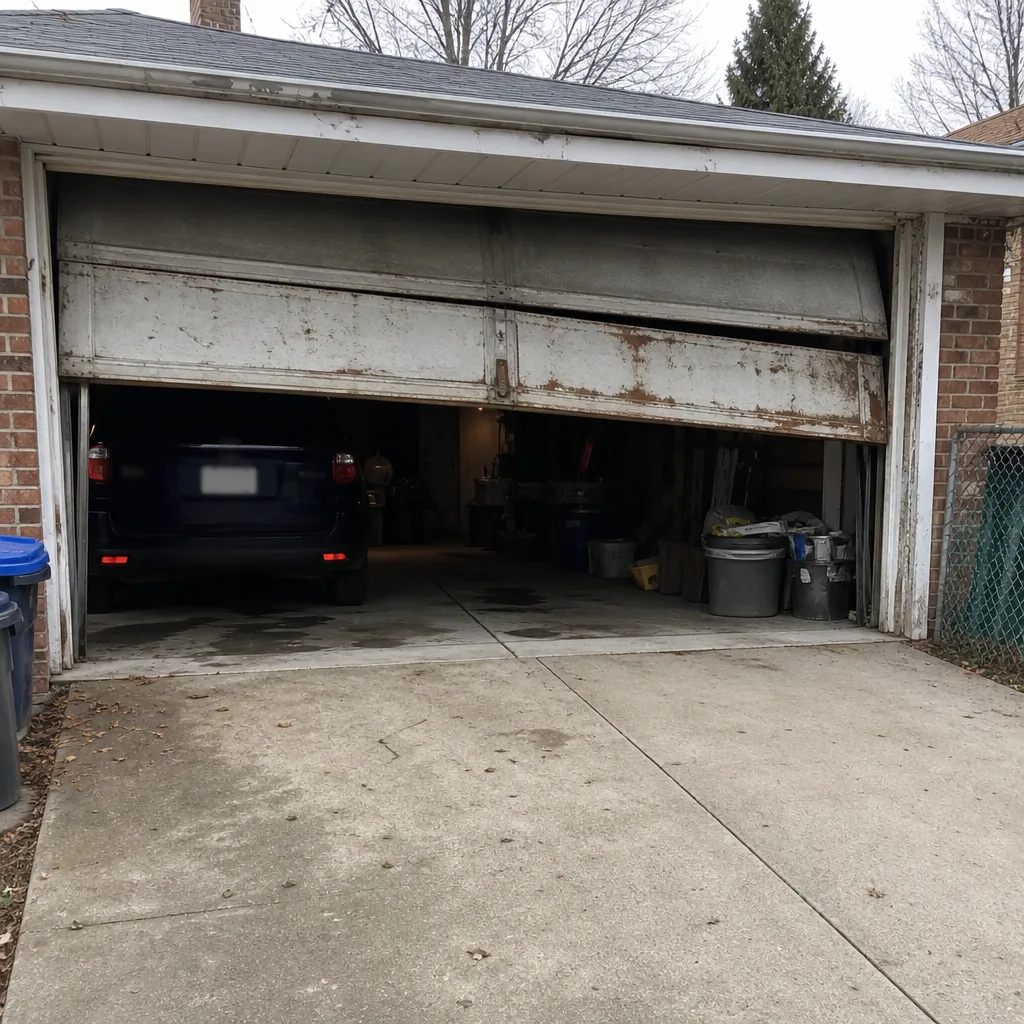 Before
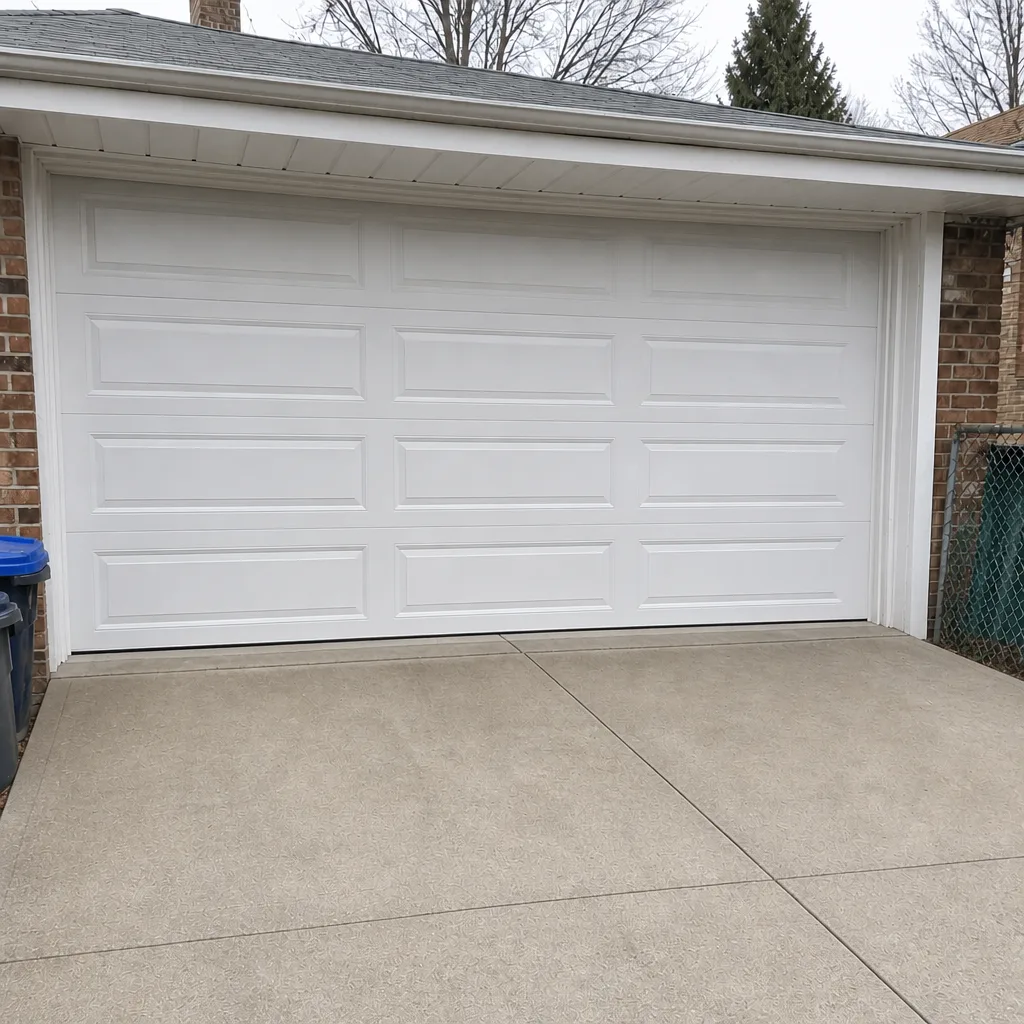 After
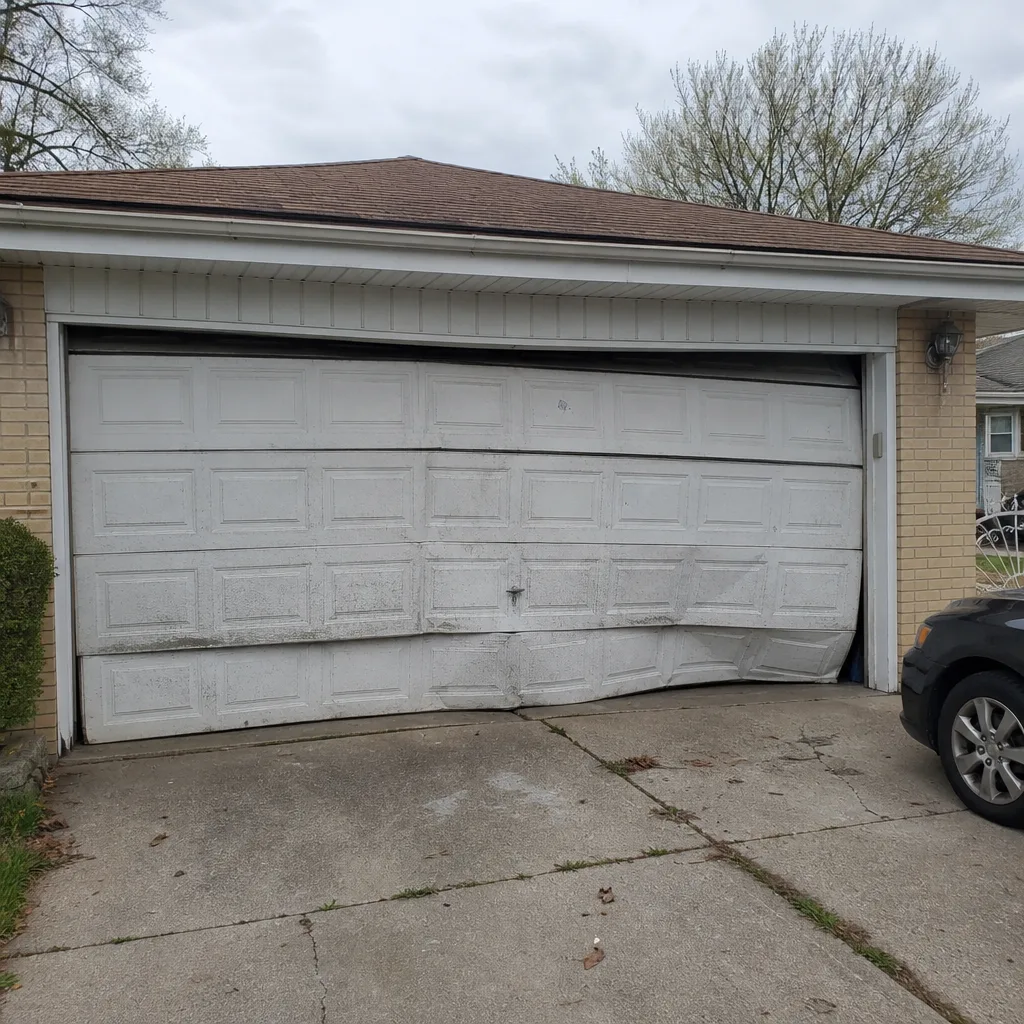 Before
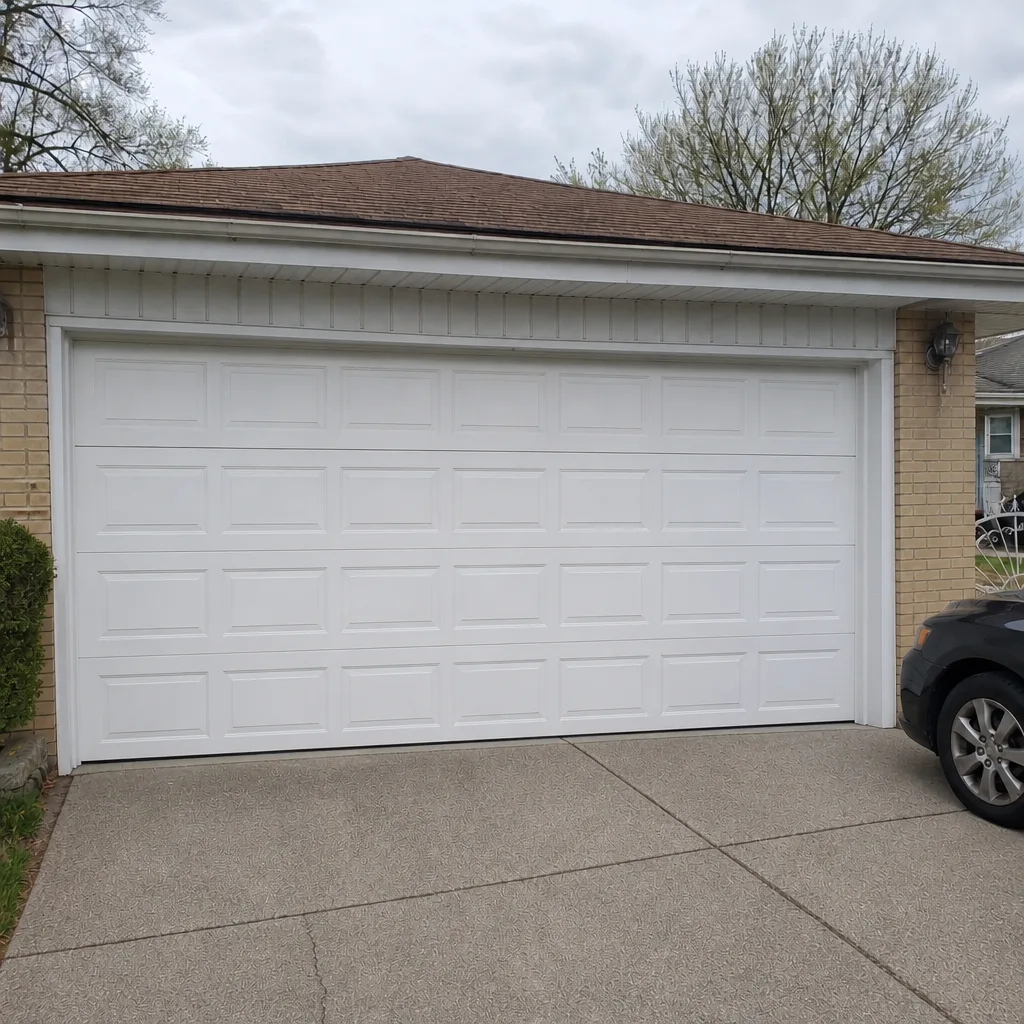 After
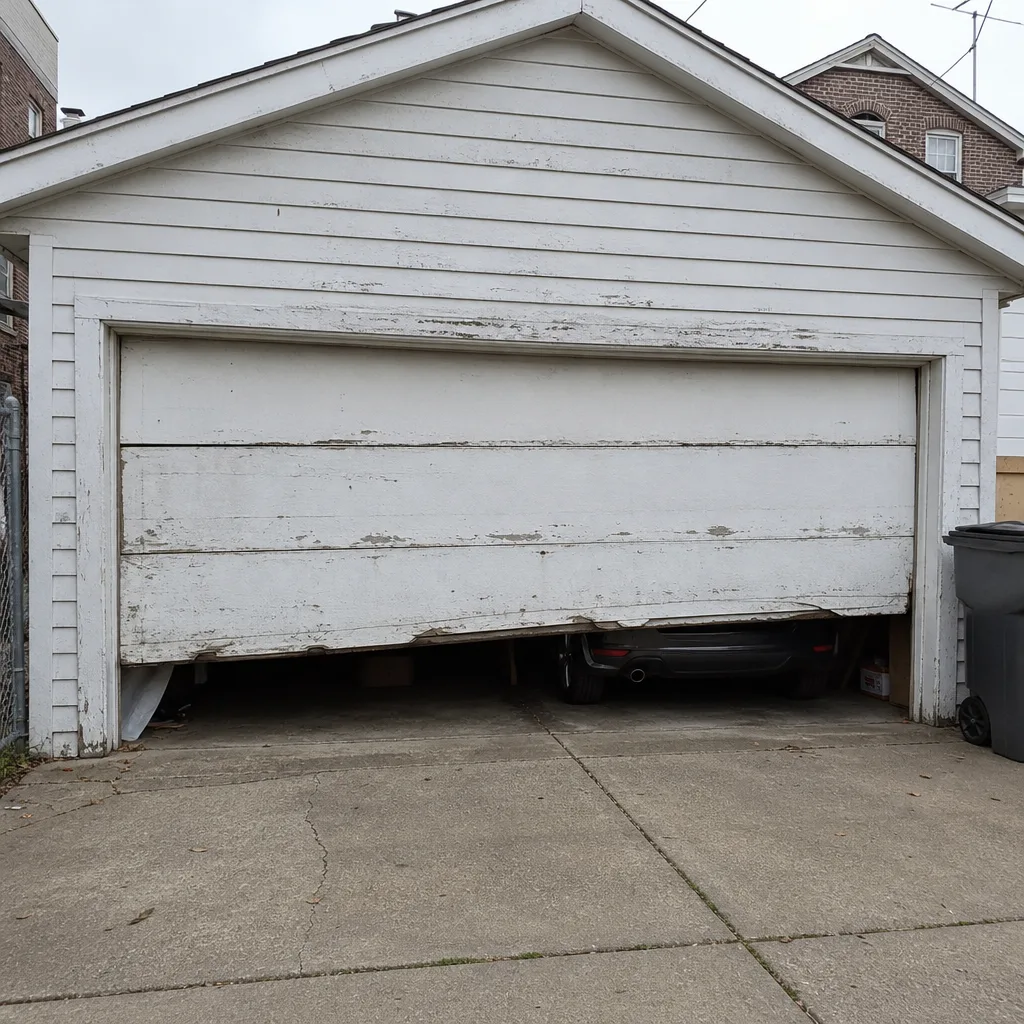 Before
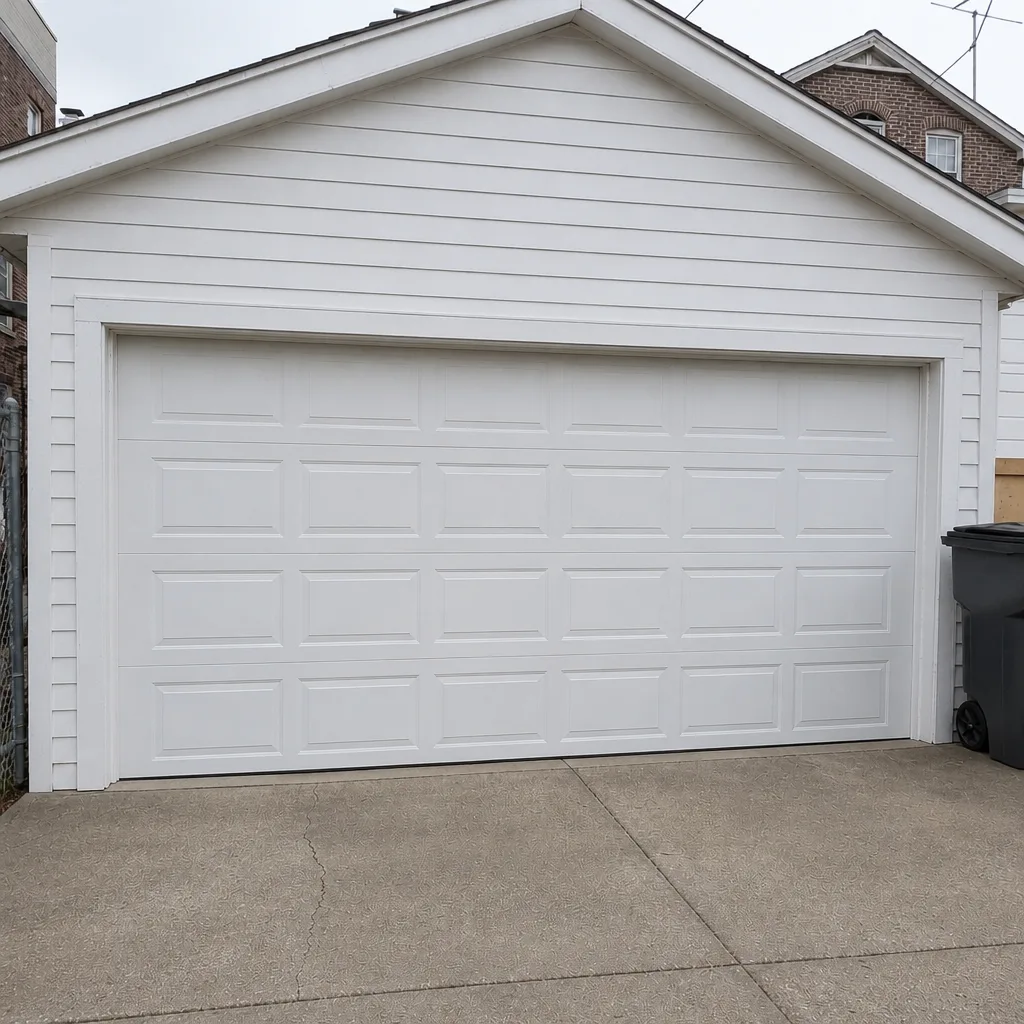 After
When to Call a Professional
Call us when the door is heavy or slams down, when you hear a bang and the door won’t lift, when a cable looks slack or off its drum, when the track is bent or the door comes off the track, or when the opener runs but nothing moves and the manual release reset didn’t fix it. Those are the cases where a wrong guess is expensive or dangerous. For sensor alignment, lubrication, and limit-switch adjustments, try it yourself first. If a symptom returns after you’ve handled it, that’s a sign the root cause is upstream. Garage Door Repair Belmont Cragin offers free estimates in Belmont Cragin, so there’s no downside to getting a straight diagnosis. Call (833) 468-5695 and tell us what you’re hearing and seeing. A free estimate costs you nothing, and it often saves a service call you didn’t need.
Frequently Asked Questions
Grinding is almost always worn rollers or a track that’s slightly out of line, not the opener. The metal-on-metal sound comes from a roller that’s flat-spotted or a hinge that’s dragging against a misaligned track. If the grind happens at the same height every time, look at the track at that spot. Call (833) 468-5695 for a free estimate, and we’ll tell you whether it’s a roller swap or a track fix.
No. A torsion spring is under extreme tension, and removing or adjusting one can release that energy suddenly and cause serious injury. This is the part of the door we never recommend for DIY. Keep the door closed, keep people clear, and call (833) 468-5695. We handle spring repair as a primary service, with a matched pair replaced together and a written price before any work starts.
Usually not. It’s most often the photo-eye sensors, a travel limit setting, or friction on the bottom seal. Start by checking that both sensors are clean and facing each other, and clear any debris. If a door reverses and also feels heavy or slams, then spring balance is worth checking. Call (833) 468-5695 if it keeps reversing after you’ve checked the sensors.
Cold hardens lubricant and shrinks metal tracks, so rollers and hinges that are quiet in July can squeal in January. That’s seasonal maintenance, solved by cold-rated lubrication and a track check. If the roughness persists once temperatures warm up, that’s a part on its way out rather than a seasonal quirk. Call (833) 468-5695 for a free estimate if it doesn’t clear.
A single torsion spring replacement typically runs $180 to $340, and a matched pair is usually replaced together at about twice that. These are typical estimates, and the written quote sets the final price before any work begins. Call (833) 468-5695 for an exact quote. Estimates are free.
The local pros we connect you with are licensed and insured as their state requires. We work on the major brands you already have, including Genie, Clopay, Amarr, Wayne Dalton, LiftMaster, Chamberlain, Craftsman, and Raynor. Our technicians have up to 10 years of experience with garage doors and openers. Call (833) 468-5695 to book a free estimate.
The Bottom Line
The core lesson of this guide is simple: diagnose the component, not the symptom. Grinding points to rollers and tracks. Heaviness and slamming point to springs. A motor that hums with no movement points to the opener or a manual release. A door that reverses points to sensors. Run the balance test before you buy anything, treat spring and cable work as off-limits, and watch for a misaligned track before it cascades into a much bigger repair. A little attention to noise and balance catches most problems while they’re still small. When in doubt, a free estimate settles it. Call Garage Door Repair Belmont Cragin at (833) 468-5695 for a free estimate in Belmont Cragin, and we’ll help you fix the right thing the first time.
Written by the team at Garage Door Repair Belmont Cragin.